About Rueben Taylor
I've Built Businesses That Gave Me Freedom. And Businesses That Nearly Broke Me.
I’m Rueben Taylor, founder of Business Success Educators. I’ve spent more than two decades coaching business owners, but some of the most valuable lessons I bring to that work have come from building businesses of my own.
I’ve experienced rapid growth, multimillion dollar revenue, large teams, international awards and the freedom that comes when a business can genuinely operate without you. I’ve also experienced cashflow pressure, business chaos, partner exits, major debt and the uncomfortable reality of discovering that a decision you were completely confident in was wrong.
I don’t share that because I think struggle automatically makes someone wiser. I share it because when you are advising established business owners, I think it matters that you understand what business feels like when there are real employees, real money, real families and real consequences involved.

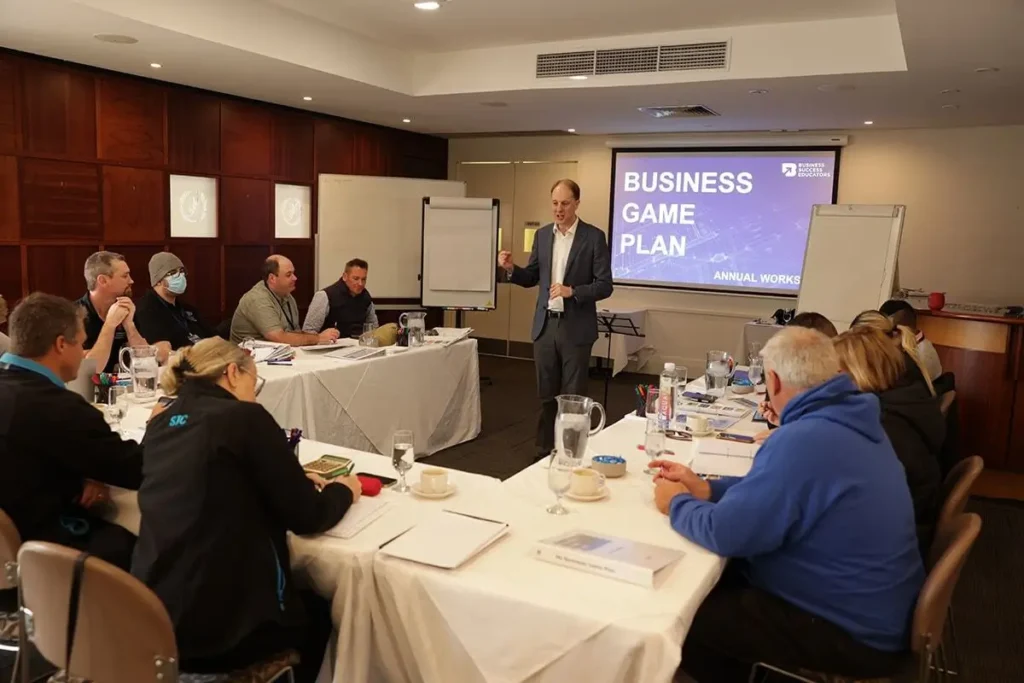
I Was an Engineer Before I Was a Business Coach
I started my career as an engineer. I was ambitious, progressed reasonably quickly and eventually realised there was only so far I could go without waiting for the people above me to retire.
So I completed an advanced MBA, discovered I had a real passion for business and started thinking seriously about doing something for myself.
At 26, I came across an opportunity to become a business coach with what was then Action International, now ActionCOACH. The idea of using what I knew to help other people succeed in business immediately appealed to me, so I left a secure corporate career and went into business for myself.
I had a mortgage, plenty of confidence and absolutely no clients.
It turned out engineering and an MBA had taught me a lot about solving problems, but very little about finding customers. After two months without a client, I was seriously questioning what I had done. So I got a coach.
He pushed me to network, make calls and do the uncomfortable things I had been avoiding. Eventually, a business owner with a chain of muffler shops took a chance on me and became my first client. More than twenty years later, I’m still grateful he did.
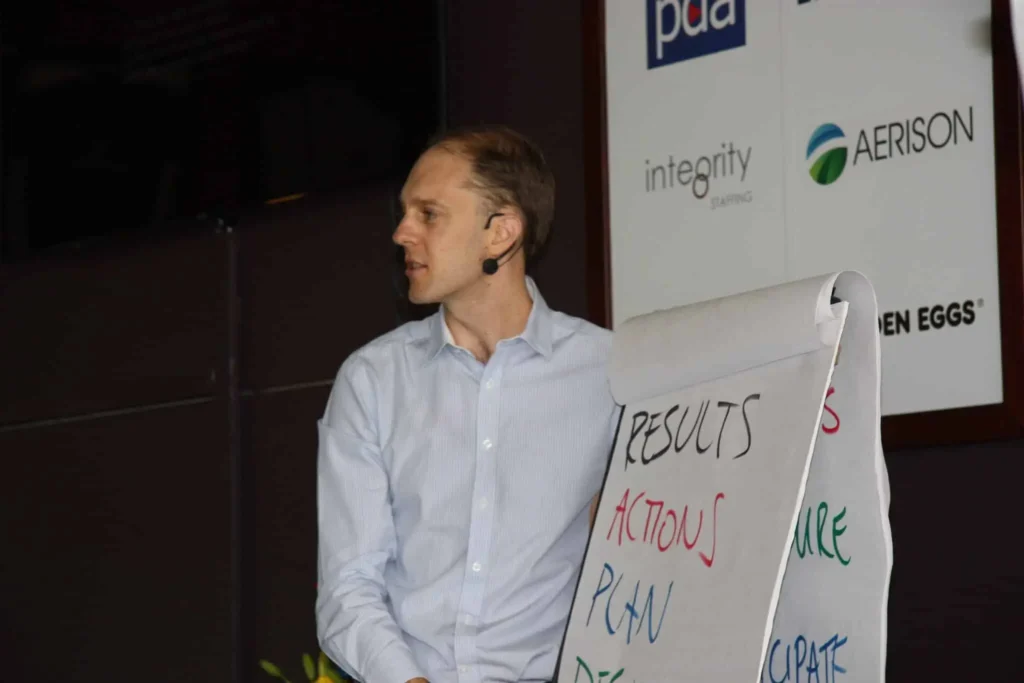
Persistence Wasn't Something Business Had to Teach Me
You may have noticed my hands are a little different. I was born that way and had around 30 operations between birth and the age of 16 to help improve their function and appearance.
There were certainly times growing up when I would have preferred to look like everyone else. But over time, my hands became something I valued rather than something I wanted to hide.
They taught me very early that you do not always get to choose the circumstances in front of you. You do get to choose what you do with them.
That mindset took me through school, first class honours in engineering, an advanced MBA and eventually into business ownership. Years later, I would need it far more than I realised.
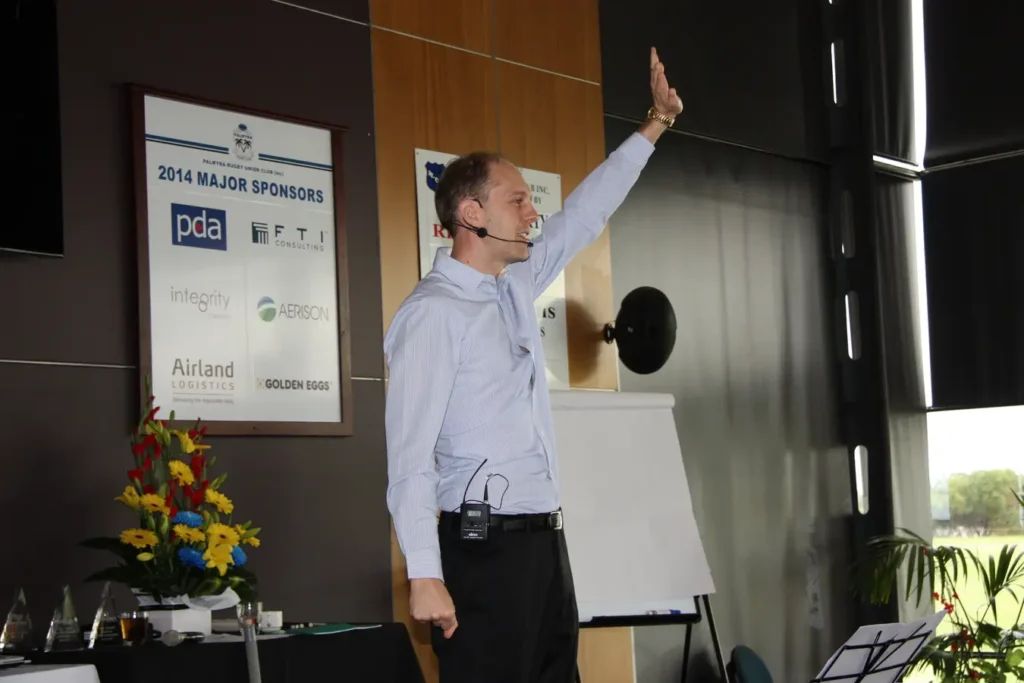
From the Outside, We Were Flying
A few years into coaching, I joined forces with three business partners. We had a big vision and committed to building something much larger than the typical one-person coaching practice.
The business grew rapidly. We became a multimillion dollar company in less than two years, built a team that eventually reached 23 people and won awards for the results our clients were achieving. From the outside, it looked fantastic.
Behind the scenes, it could be chaos.
There were a lot of people, a lot of moving parts and not always enough control. Cashflow was regularly tight. I remember trying to put our own credit card through our merchant machine one week because we were trying to cover payroll. It didn’t work.
At the same time, I was working ridiculous hours. I was often first into the office and last to leave. I was prepared to work hard, but I had a wife and a young family and somewhere along the way the business I was building to create a better life had started consuming it.
Then my three-year-old daughter held up a mirror.

“Sorry Daddy, I Can't Now. I'm Working.”
What was all of that success actually for?
I Didn't Need to Abandon the Business. I Needed to Build a Better One.
The answer wasn’t to stop being ambitious or suddenly decide growth was bad. We needed to change the way the business worked.
We put better systems in place, developed people I could trust and deliberately reduced the number of things that relied on me personally. I had to learn how to delegate properly, create clearer boundaries and accept that my job as the owner needed to change as the business grew.
Eventually, I was able to take five months away and travel through Europe with my family. That experience completely changed my understanding of business freedom.
Freedom isn’t having no responsibility. It isn’t lying on a beach while somebody else runs your company. It is having choices.
I could be heavily involved when I wanted to be, but the business was capable of continuing when I wasn’t there. That distinction still shapes the work I do with owners today.

Then We Had to Rebuild
Business rarely follows a neat upward line. Later, one of our partners decided to leave. Six months afterwards, another partner exited, and we had to rethink the entire business.
We sold parts of the company to members of our team, reduced from 23 people to three and were left carrying around $500,000 in debt. It was not where we expected to end up.
But a smaller business forced us back to the fundamentals. We simplified, created a plan, focused closely on the numbers and cleared that debt within 18 months.
And for a while, I had exactly the kind of business I wanted. I was earning good money, picking my children up from school, attending assemblies and sports carnivals and enjoying a strong work life balance. I was consistently ranked amongst the top coaches in the network globally, our business had won nine global and 15 Asia Pacific awards, and I had been recognised in Western Australia’s 40 Under 40.
Then I made another major bet.

One of My Biggest Business Ideas Became One of My Most Expensive Lessons
We became increasingly interested in the problem of business failure and started developing an online platform that could diagnose businesses and give owners structured help.
We joined the Founders Institute, graduated at the top of the Perth cohort, travelled to Silicon Valley and began talking with investors around the world. At one stage, we were in discussions with investors looking at putting $1 million into taking the platform into China.
We thought we were onto something enormous. So we built for the future we expected. We hired people. We invested heavily in the product. We raised money and expanded.
The problem was that the market and revenue had not caught up with the vision. Then our major international investment fell over.
We were left with around $1 million in debt and approximately $2,000 a month in revenue. It was the hardest period of my business life.
There Are Some Lessons You'd Prefer Not to Pay For
I had to make decisions I never wanted to make, including letting eight loyal team members go shortly before Christmas. There was no clever strategy that made the situation disappear.
We had to face the numbers, negotiate with suppliers and investors, put payment arrangements in place and work through the problem one decision at a time.
I returned to what I knew I could do well: coaching business owners. I created a plan, rebuilt the coaching business and have since repaid close to $750,000 of that debt.
Would I rather have learned some of those lessons from a book? Absolutely. But I didn’t. And today, those experiences give me a very different perspective when an owner is sitting opposite me trying to make a difficult decision.

That's Why I Coach the Way I Do
I don’t believe established business owners need somebody constantly giving them more things to do. Most already have enough ideas.
What they need is someone who can look across the business, ask the uncomfortable questions, help separate the real problem from the symptoms and make the next decision clearer.
- Sometimes the answer is growth. Sometimes it is simplification.
- Sometimes you need another person. Sometimes hiring another person is the last thing you should do.
- Sometimes the team needs to lift. And sometimes the owner has become the biggest constraint in the business.
Good coaching should be able to tell the difference.
An Engineer's Brain. A Business Owner's Experience.
My engineering background still influences the way I approach business. I like understanding how things work, why they are failing and which constraint is having the greatest impact on the whole system.
That approach is combined with an advanced MBA, more than two decades in business coaching and the experience of building, scaling, simplifying and rebuilding businesses myself.
The credentials matter, but they are not the reason I expect somebody to trust me. The work has to create results.
Across the latest 12 month period, my clients increased revenue by an average of 20 per cent and bottom line profit by an average of 198 per cent. More importantly, many have built teams that take greater responsibility, reduced the hours they personally work and finally been able to take meaningful time away from businesses that once depended on them for everything.

The Business Is Only Part of the Story
I’m still ambitious. I still believe businesses should grow, make money and create wealth. I just don’t believe those things are the entire point.
The business should also give you the ability to be there for your family, look after your health, enjoy your life and contribute to things that matter to you.
For me, one of those things is the Meridian Global Foundation, which I co-founded to inspire philanthropy and create sustainable, high-impact giving. The Foundation has raised more than $1.4 million and donated more than $700,000 across 47 charities, while building an investment fund with the long-term goal of giving away $1 million every year.
That is another reason I care about helping good businesses become stronger. Successful businesses do more than employ their owners. They support families, create jobs and have the capacity to make a meaningful contribution to the communities around them.
25+
Years coaching business owners
24
Global & Asia Pacific awards
+20%
Average client revenue growth, latest 12 months
+198%
Average client bottom line profit growth
Your Business Should Add to Your Life, Not Take It Over.
That is the principle behind Business Success Educators today.
Not because running a business should always be easy. It won’t be. Not because you should stop working hard. Sometimes hard work is exactly what is required.
But if the business becomes more successful while giving you fewer choices, placing more pressure on your family and becoming increasingly dependent on you, eventually something has to change.
I help established Perth trade and service business owners work out what that change needs to be.